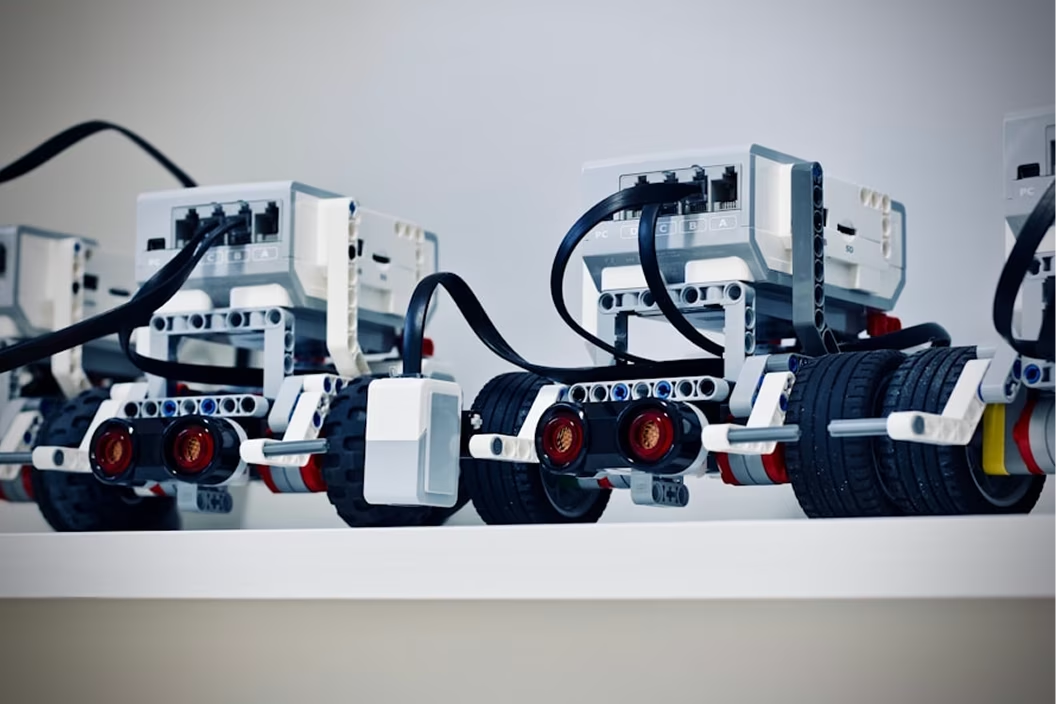
Smarter navigation for complex environments
Autonomous robots are increasingly deployed in environments designed for humans — not machines. From warehouses and hospitals to hotels and public spaces, these settings are dynamic, unpredictable, and often crowded. Navigation in such environments requires more than obstacle avoidance. It demands contextual awareness, safety guarantees, and adaptability in real time.
This article explores how modern robotic systems approach navigation in complex environments and what design principles make them reliable in real-world deployment.

Why navigation in human environments is fundamentally different
Traditional robotic navigation often assumes structured, predictable spaces. Human environments break these assumptions in several ways.
Key challenges include:
- Dynamic obstacles that move unpredictably
- Narrow passages and shared spaces
- Human behavior that cannot be pre-programmed
From perception to decision-making
Navigation is not a single module. It is the result of multiple tightly coupled systems working together.
At a high level, this process includes:
- TPerception – understanding the environment through sensors
- Localization – determining the robot’s position within that environment
{{quote}}
Final thoughts
Reliable navigation in complex environments is a multidisciplinary challenge that blends robotics, AI, and human-centered design. Progress in this area directly determines whether autonomous systems can move from controlled demos to meaningful real-world impact.
{{cta-banner}}